
A free streaming site that offers movies and series without a subscription collects much more than just clicks in the background. Xamoz com illustrates a recurring model: a well-designed platform, an attractive catalog, and forms that silently capture card numbers, identifiers, and personal data. Understanding the mechanisms of this capture allows for concrete protection against it.
Fake streaming sites and bank data collection: the technical mechanism
Fraudulent platforms like xamoz com do not operate like traditional viruses. They do not need to install software on your device to achieve their goal. The trap lies in the interface itself: a registration form, a payment page for a supposed “free trial,” or a pop-up window asking for your bank details under the pretext of age verification.
What makes these sites difficult to spot is their appearance. Norton reminds us that the HTTPS padlock is no longer a reliable indicator of legitimacy. A valid TLS certificate only guarantees that the connection is encrypted, not that the recipient is honest. Fraudulent sites display this padlock while serving as a platform for collecting credit card numbers.
Before entering any personal information on an unknown streaming site, it is essential to assess the risks associated with xamoz com and similar platforms that multiply misleading signals.
Why design no longer provides protection
Classic security guides advise checking the visual appearance of a site. This recommendation has become insufficient. Fraudsters now use professional templates, catalogs of movies copied from legitimate platforms, and fabricated reviews. The trust score assigned by some domain analysis tools (Semrush, ScamAdviser) remains a useful indicator, but it is not infallible when the site has just been created.
Concrete warning signs on a suspicious streaming platform
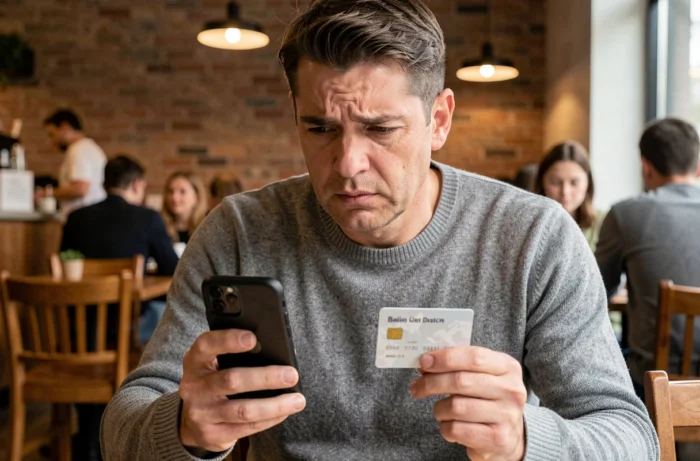
Identifying a fraudulent site requires looking beyond the surface. Several elements can help distinguish a legitimate streaming platform from a data trap.
- Domain age: a site registered for just a few weeks or months, without verifiable history, poses a high risk. Free WHOIS tools display the domain creation date.
- Lack of complete legal mentions: no physical address, no SIRET number or equivalent, no verifiable contact. A legitimate streaming company (even a free one) displays its contact details.
- Request for bank details for content advertised as free: this is the most direct signal. No free streaming platform needs your card number to stream content.
- Multiple redirects and aggressive pop-ups: each click opens a new window, often leading to payment pages or third-party forms. This behavior reveals a collection objective, not content distribution.
The combination of two or three of these signals is enough to justify the immediate closure of the site and, if data has been entered, quick action with your bank.
What to do after entering your data on xamoz com
If you have provided a credit card number or other sensitive information on xamoz com or a similar site, the speed of your response determines the extent of the damage. Blocking your card within an hour significantly reduces the risk of fraudulent charges.
Immediate steps
Contact your bank by phone (the number is on the back of your card) to report the incident and request a block. Most institutions have a service available 24/7 for such situations.
Immediately change the passwords of accounts that use the same email address or password as the one entered on the suspicious site. Reusing the same password across multiple sites increases the attack surface.
Report the site on the government platform Pharos (internet-signalement.gouv.fr). This report feeds into databases used for blocking fraudulent sites in France. You can also file a pre-complaint online if an unauthorized charge has already occurred.
Monitor your bank statements in the following weeks
Fraudulent charges do not always appear immediately. Some malicious operators first test small amounts before attempting larger sums. Check your statements for at least two months after the incident.
Technical protections against online bank data theft
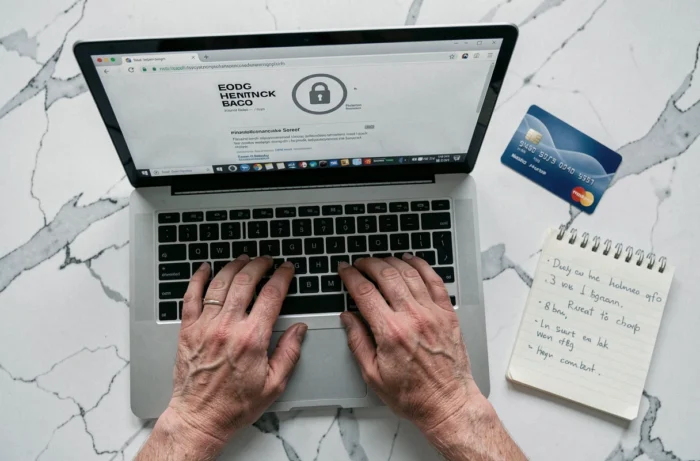
Beyond human vigilance, several technical measures limit the exposure of your bank data, even against sites that perfectly imitate legitimate platforms.
Strong authentication (PSD2) requires double verification for most online payments in Europe. Even if a fraudulent site retrieves your card number and CVV, it cannot validate a payment without the second factor (notification on the banking app, SMS code associated with a personal code).
Virtual one-time cards, offered by most French banks, generate a temporary card number linked to a specific amount and duration. If this number is intercepted by a fraudulent site, it becomes unusable after the transaction or after expiration.
- Enable real-time notifications from your banking app for every card transaction. An unrecognized charge can be spotted within seconds.
- Use a password manager that generates a unique identifier for each site. If a site like xamoz com is compromised, your other accounts remain protected.
- Never enter your bank details on a free streaming site, regardless of the reason given (verification, trial, identity confirmation).
The proliferation of fake streaming sites with professional design makes classic reflexes (“check the padlock”) insufficient. Protection now relies on a combination of vigilance against warning signals, appropriate banking tools, and a simple rule: any content presented as free that asks for a credit card is never free.