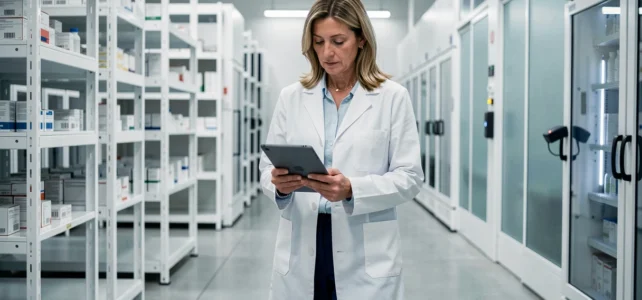
Pharmaceutical logistics encompasses the operations of transport, storage, and distribution of medications from their place of manufacture to the patient. Its uniqueness lies in a non-negotiable constraint: each product must maintain its therapeutic integrity at every step of the journey. Any failure in this regard can render a treatment ineffective or even dangerous.
Geopolitical Risks and Fragility of Pharmaceutical Supply Routes
Competitors extensively address the cold chain or traceability but rarely tackle a factor that has become crucial: geopolitics as an operational logistics risk. Disruptions on critical maritime routes, such as the Strait of Hormuz, directly affect timelines, costs, and the availability of active ingredients or finished medications.
A supply disruption on a major maritime axis cannot be compensated for in just a few days. Pharmaceutical raw materials often transit through geographically concentrated corridors. When one of these corridors closes or slows down, the cascading effect impacts manufacturing, then distribution, and finally pharmacies.
Manufacturers that map their flows and diversify their supply sources are better able to absorb these shocks. Logistical resilience in the pharmaceutical supply chain today requires a continuous geopolitical reading, not just warehouse optimization. Specialized resources allow for tracking these developments, notably https://pharmalog.fr/, which covers the issues of the sector.
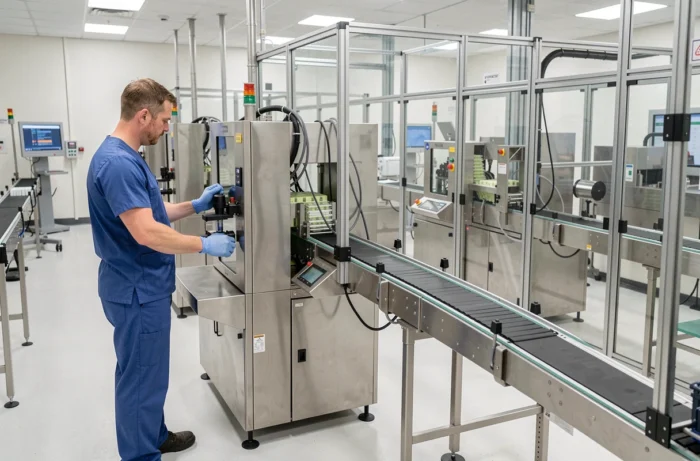
Serialization and Immutable Traceability of Pharmaceutical Lots
Pharmaceutical traceability is no longer limited to knowing where a package is located. Serialization of lots, which involves assigning a unique identifier to each unit of medication, transforms how flows are controlled and secured.
The objective is twofold. First, to combat counterfeiting by verifying the authenticity of each box at every point in the chain. Second, to accelerate lot recalls in case of quality defects by identifying the affected units within hours rather than days.
What Immutable Traceability Changes
Recent systems aim for so-called “immutable” traceability: every movement of a lot is recorded in a non-modifiable manner. This approach reduces the risks of document falsification and strengthens regulatory compliance during inspections.
Combined with predictive automation of warehouses, this systematic serialization becomes a competitive advantage. Distributors capable of guaranteeing complete and verifiable traceability attract laboratories keen on protecting the integrity of their products.
Industrial Site Transfers: An Underestimated Logistics Risk
When a laboratory relocates a production line from one site to another, the logistical consequences are considerable. A poorly managed site transfer can cause medication shortages for several months, until the new site reaches its full capacity and obtains the necessary validations.
Compliance with Good Manufacturing Practices (GMP) is the central point of vigilance. Each new site must undergo inspections that verify that production, storage, and shipping conditions meet regulatory standards. An inspection delay holds up the entire downstream chain.
- The qualification of equipment at the new site often takes several months before the first compliant production
- Buffer stocks must be built up before the transfer to avoid any distribution break
- Coordination between the old and new sites requires parallel logistical management, which is costly but essential
These transfers have become more frequent in a context where laboratories are restructuring their manufacturing networks for economic or geopolitical reasons.

Pharmaceutical Warehouses and the Rise of Sensitive Therapies
The rise of biological drugs, gene therapies, and cell treatments is redefining the very design of pharmaceutical warehouses. These products require storage conditions that far exceed the classic cold chain between 2 and 8 degrees Celsius.
A warehouse suited for advanced therapies operates as a highly engineered environment, with distinct temperature zones, validated monitoring systems, and handling protocols specific to each type of product.
Why Warehouse Design is Becoming Strategic
Managing these ultra-sensitive products imposes heavy investments in infrastructure. Cryogenic storage spaces, backup energy systems, and real-time monitoring devices are no longer optional.
- Cell therapies sometimes require temperatures below minus 150 degrees, necessitating rare specialized equipment
- Each temperature zone must have redundant sensors to avoid any loss due to technical failure
- The regulatory qualification of these spaces adds a layer of complexity to commissioning timelines
This evolution pushes logistics providers to rethink their facilities. A warehouse designed for conventional tablets cannot accommodate gene therapies without profound transformation.
Pharmaceutical logistics finds itself at the crossroads of strict regulatory constraints, profound therapeutic changes, and unpredictable geopolitical tensions. Players who simultaneously invest in the resilience of their supply routes, the serialization of their flows, and the adaptation of their infrastructures to new therapies are positioning themselves in a landscape where mere cost optimization is no longer sufficient to ensure security.