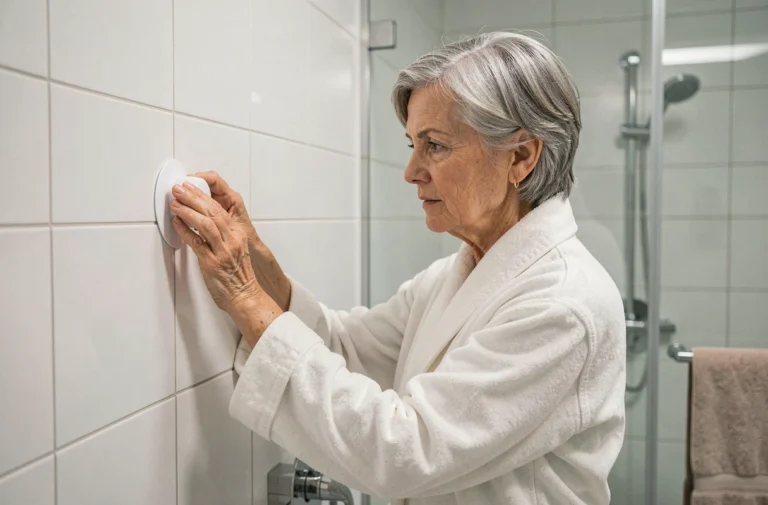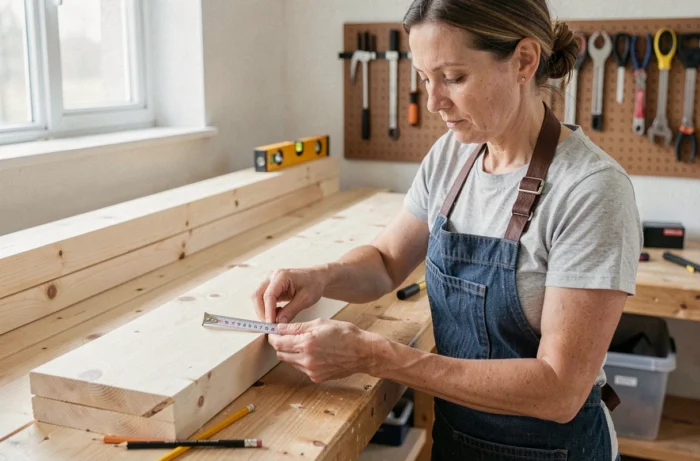
Learning to install a floor covering, redo a plumbing joint, or build a partition wall by oneself requires a minimum level of method. Online DIY course platforms are multiplying, but not all cover the same areas or target the same audience. What criteria distinguish a useful training program from a simple general video tutorial? The gap can be measured on three axes: the technical scope covered, the level of support offered, and the regulatory status of the training.
Certified DIY training or leisure courses: what the regulations say
Before choosing a program, a regulatory distinction needs to be made. Since 2024, non-certifying DIY workshops for the general public are no longer eligible for CPF funding. Only training linked to a certification registered with the RNCP or the Specific Directory remains eligible.
A decree from May 2, 2024, established a mandatory flat-rate contribution for any employee using their CPF. In 2026, this flat-rate contribution was raised to 150 euros, which increases the cost of accessing certified training and effectively excludes leisure-oriented platforms from public funding.
| Criterion | Certified training (RNCP) | Leisure course / home autonomy |
|---|---|---|
| CPF funding | Eligible (with a flat-rate contribution of 150 euros) | Not eligible |
| Certification awarded | Recognized professional title | No official certification |
| Objective | To practice a building trade | To carry out one’s own work |
| Regulatory framework | Trade standards (NF C 15-100, DTU, etc.) | Practical advice, no qualification |
| Target audience | Professional retraining | Individuals, homeowners, tenants |
A platform like Bricoludik positions itself in the home autonomy segment. It does not provide any certification allowing one to practice a regulated building trade. For an individual looking to renovate their kitchen or repaint a wall, this positioning is sufficient. For someone considering a career change into plumbing or electricity, they will need to aim for a certifying organization.
Taking a practical Bricoludik course for home improvement allows one to acquire concrete technical skills without claiming a professional qualification, which meets the needs of most amateur DIYers.
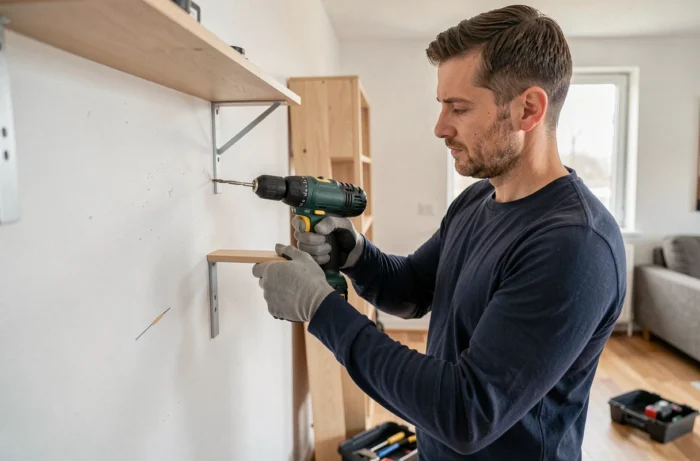
Home projects accessible without a craftsman: painting, flooring, and minor plumbing
Not all tasks lend themselves to self-learning. Some interventions require qualifications (electrical work on panels, gas connections), while others remain accessible with structured support.
Painting and wall coverings
Painting is the most common entry point. The action is accessible, but the preparation of the surface (filling, sanding, primer) accounts for most of the mistakes made by beginners. A course that details wall preparation before application provides more than a tutorial focused on roller technique.
Flooring and tiling
Installing laminate or click vinyl flooring does not require advanced skills. However, tiling requires mastery of leveling and layout that justifies guided learning. Cutting, double gluing, and managing joints are steps where feedback from an instructor makes a difference.
Basic plumbing
Replacing a faucet, installing a shower hose, or changing a flush mechanism are interventions that can be accomplished after a practical course. Repairs involving the main water network or a thermodynamic balloon go beyond what is reasonable for an amateur.
- Replacing seals and hoses: accessible from the first session, low risk of damage
- Installing a mixer or a siphon: requires understanding the tightening direction and thread sealing
- Intervention on copper or PEX piping: feasible with training, but requires specific tools (crimping pliers, blowtorch)
DIY autonomy: measuring the real return on investment
The main argument for DIY courses for individuals is based on the savings made compared to hiring a craftsman. This promise deserves to be nuanced depending on the type of project.
For painting work, the cost of professional labor represents the majority of the quote. Learning to prepare and paint oneself therefore generates tangible savings. The materials (rollers, tarps, paint) remain the same whether one hires a professional or not.
For tiling or plumbing, the equation changes. The purchase or rental of specialized tools (tile cutter, laser level, crimping pliers) adds to the cost of training. On a small project (a bathroom of a few square meters), the savings remain modest if one accounts for the time spent.
Where autonomy provides a lasting advantage is in the ability to manage routine repairs without delay. A leaky seal, a wall to touch up after a move, a shelf to fix: these micro-interventions, repeated over several years, represent a volume of expenses that the trained DIYer absorbs without seeking help.
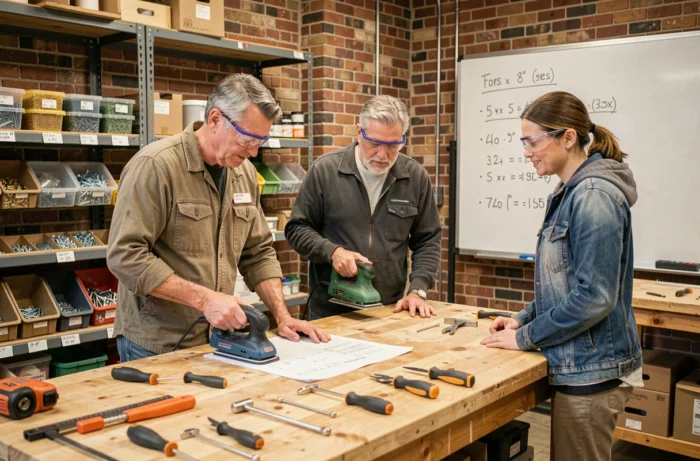
Limits of online courses for complex renovation projects
DIY platforms cover a scope that stops at work not subject to strict professional standards. Electricity beyond replacing a switch, modifying load-bearing walls, external insulation: these tasks require either a qualification or the intervention of a study office.
An online DIY course also does not replace on-site diagnostics. Every house presents constraints (humidity, nature of the support, age of the network) that a remote instructor cannot assess. Home training with a professional coach, like those offered by some market players, partially fills this gap.
- Work on the electrical network at the panel: qualification required, outside the amateur’s scope
- Modification of load-bearing walls: prior structural study required
- External thermal insulation: implementation governed by DTUs, often conditioned to public aid
- Gas connection: intervention reserved for certified professionals
For common interior renovation projects (painting, flooring, minor carpentry, surface plumbing), a structured course path of practical classes covers the vast majority of the needs of a homeowner or tenant. The boundary lies at the point where the safety of occupants or regulatory compliance comes into play: at this stage, referring to a qualified professional remains the only reasonable option.