
When we think of ecology in politics, we often imagine abstract parliamentary debates, far removed from daily life. The journey of Aline Archimbaud, the ecologist senator from Seine-Saint-Denis from 2011 to 2017, shows something different: a citizen engagement rooted in very concrete issues, from asbestos to endocrine disruptors, including access to housing.
Ecologist Senator in Seine-Saint-Denis: A Rare Territorial Anchor
Seine-Saint-Denis is not the department one spontaneously associates with political ecology. Yet it is here that Aline Archimbaud built her mandate, elected in September 2011. This choice of territory says something about her conception of engagement: ecology is not limited to preserved natural spaces.
In a department marked by social inequalities and urban density, environmental issues take on a different face. Exposure to asbestos in social housing, air quality near roadways, access to healthy food in school cafeterias: these are all topics where ecology and social justice intersect directly.
This positioning contrasts with a political ecology often perceived as disconnected from the concerns of working-class neighborhoods. In the Senate, Aline Archimbaud sat within the ecologist group, but her parliamentary work addressed solidarity and integration as well as the environment in the strict sense.

Asbestos, Endocrine Disruptors, Cafeterias: Concrete Legislative Battles
Why these topics rather than others? Because they stem from situations experienced by residents. Asbestos, for example, remains a major health issue in the French housing stock. Aline Archimbaud contributed to a senatorial report titled “Asbestos: Ongoing Issues, Meeting the Challenge of Asbestos Removal,” which addressed the financing and organization of the removal of this hazardous material.
Each bill proposal started from a measurable public health issue. Her resolution on endocrine disruptors aimed to strengthen the fight against exposure to these chemical substances found in everyday objects. The text did not merely denounce a risk: it called for applicable prevention and protection measures.
Regarding food, her bill on implementing a vegetarian option in school cafeterias illustrates a similar approach. The idea was not to convert students to vegetarianism, but to offer an additional choice, with a double benefit: reducing the carbon footprint of meals and diversifying diets.
Work That Systematically Intersected Environment and Solidarity
What distinguishes this type of engagement is the refusal to separate ecology and social issues. The budget reports she participated in, particularly on “solidarity, integration, and equal opportunities” funding, show that the ecological transition cannot ignore the most exposed populations.
She also submitted a resolution on the protection of environmental refugees, a topic that anticipates migrations linked to climate change. At the time, the very term “environmental refugee” did not have a clear legal status in French law.
Political Ecology in France: Why Local Engagement Matters More Than Electoral Scores
Political ecology is going through a period of doubt. A documentary aired on ARTE in August 2026 posed a direct question: is political ecology the big loser of the climate crisis? The observation is paradoxical. The climate emergency has never been so well documented, yet ecologist parties struggle to convert this awareness into lasting electoral influence.
This gap can partly be explained by programmatic choices that divide. The Federal Council of Ecologists adopted a motion in April 2023 establishing opposition to nuclear power as a fundamental value of the party. In March 2024, a European programmatic foundation set the goal of 100% renewable energy in Europe by 2040. These structuring positions polarize the debate and make it difficult to unite beyond the activist base.
In the face of this difficulty, the paths of elected officials like Aline Archimbaud offer another perspective. Their impact is not measured in electoral scores, but in bills submitted, reports published, and debates opened in Parliament.
- A report on asbestos removal that informed public renovation policies
- A resolution on endocrine disruptors that helped bring the issue into parliamentary debate
- A proposal on school cafeterias that foreshadowed subsequent legislative developments on sustainable food
Civic engagement in politics is also judged by the impact left in legislative texts.
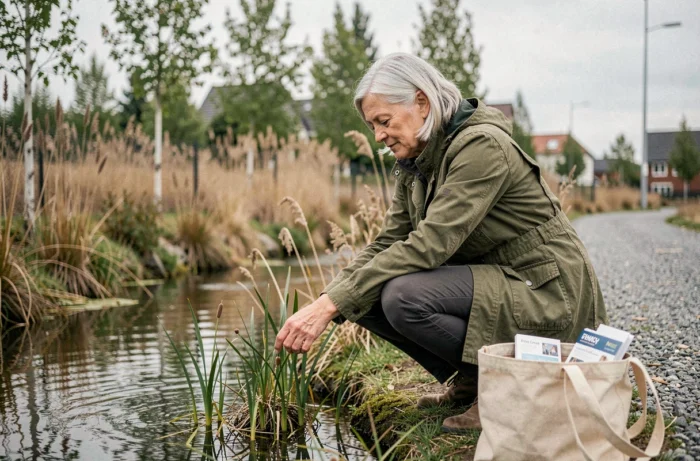
Civic Engagement and Ecology: What This Journey Teaches New Generations
You may have noticed that the political figures most cited in terms of ecology are rarely those who have worked the most on legislative texts? Media coverage favors spectacular statements, not committee work.
The journey of Aline Archimbaud reminds us that ecological engagement in politics first requires mastery of legislative tools. Drafting an amendment, defending a report in committee, building a resolution proposal: this foundational work remains the most direct lever for transforming a conviction into an applicable rule.
For citizens wishing to engage, several lessons emerge from this approach:
- Start from a local and concrete problem rather than a general principle
- Systematically link environmental issues to the living conditions of the affected populations
- Utilize existing institutional tools (bills, resolutions, reports) rather than circumventing them
- Accept that results take time and are not always measured in electoral victories
Political ecology gains credibility when it produces texts, not just speeches. Aline Archimbaud’s parliamentary work in Seine-Saint-Denis illustrates this conviction: each report submitted, each resolution defended represents a step toward public policies more attentive to the health and environment of residents.