
A DIY enthusiast managing their projects alone spends a considerable amount of time searching for the right method, the right material, and the right sequence of work. Subscribing to a DIY magazine addresses this issue by delivering a curated editorial selection, ready to use, at regular intervals. Here we analyze what this format concretely offers compared to free searching on the web.
Editorial sorting and prioritization of DIY projects
The value of a specialized magazine lies not in the quantity of information but in what it eliminates. An editorial committee tests, filters, and organizes topics before publication. The reader receives content where projects are already categorized by difficulty, by season, or by room in the house.
On a video platform, a query like “renovate a countertop” returns hundreds of results. Some are sponsored, others are years old, and many contradict each other regarding product choices. The editorial sorting of a magazine removes this comparison step. Each published step-by-step guide has been technically validated, reducing the risk of error on the job site.
Choosing a subscription to the DIY magazine lemagazinedubricoleur means delegating technical monitoring to a specialized editorial team, rather than conducting it oneself between drilling sessions.
Print format and focus on the job site
We observe a recurring phenomenon among DIY enthusiasts who work with a smartphone placed on the workbench: distraction. A notification interrupts the reading of the tutorial, an advertisement redirects to a comparison site, the algorithm suggests a related video. The lost time accumulates without being measured.

The print magazine cuts this circuit. You open it to the project page, place it next to the work area, and it stays there, stable, without distracting solicitations. This logistical detail has a direct impact on the actual duration of a project.
An offline medium eliminates the temptation of multitasking. For tile installation or furniture assembly, keeping both hands free and eyes on a printed diagram changes the flow of execution.
Readability of technical diagrams
DIY magazines publish exploded views, sections, and dimensioned plans in a format often more readable than a phone screen. On paper, a plumbing diagram or a cutting template can be consulted at a glance, without zooming or scrolling.
Some readers cut out the templates provided in the pages to transfer them onto the material. This type of use remains impossible with exclusively digital content.
Seasonal monitoring in decoration and home improvement
A subscription creates a rhythm of reception that coincides with the actual calendar of work. Spring issues address outdoor arrangements, gardens, and terraces. Autumn issues focus on insulation, heating, or interior renovation.
This structured seasonal monitoring prevents launching a project at the wrong time. Preparing exterior coatings in the middle of winter or starting a wooden terrace as rain approaches are classic mistakes that regular reading of a magazine helps to avoid.
- The decoration and interior design sections offer reusable ideas from one room to another, over several months.
- The materials files compare new products available in DIY stores with professional references.
- The archivable technical sheets constitute a reference library that can be consulted for each new project.
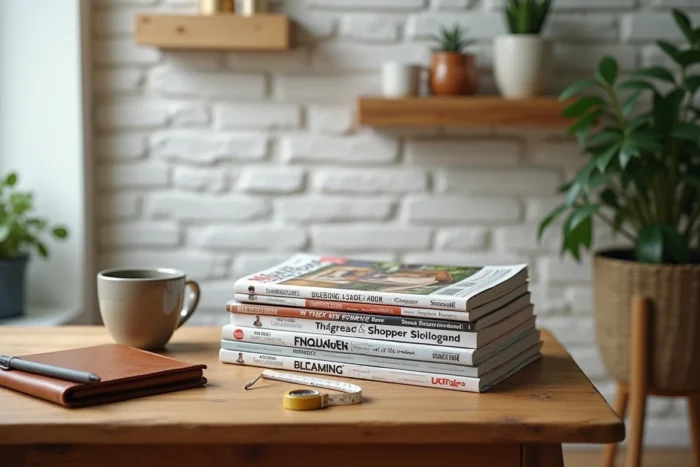
DIY magazine subscription and profitability of invested time
The true cost of a DIY project is not limited to materials. It includes the time spent identifying the method, listing supplies, and correcting a technical error. A magazine reduces this hidden cost by providing a validated method from the first reading.
Let’s take a common example: installing a wall shelf on a drywall. An average online tutorial covers the topic in three minutes, without mentioning the type of anchors suitable for the expected weight, or the minimum distance between the fixing points. A magazine article often dedicates an entire page to these details, with a summary table of allowable loads by type of fixing.
What a typical issue covers
A single issue of a DIY magazine generally addresses several complementary themes:
- A main project detailed step by step, with a list of materials and an estimated completion time.
- Short tips that can be applied immediately, often related to tools or finishes.
- A home or decoration feature focused on current trends, with budget adaptation advice.
- Feedback from readers on past projects, highlighting pitfalls encountered in real situations.
This density of information in a compact format represents a content/reading time ratio that is hard to match with fragmented web searches.
Subscribing to a DIY magazine is not intended to replace video tutorials or specialized forums. It occupies a different space: that of a regular editorial filter that organizes information before it reaches the workbench. For a DIY enthusiast who lacks time, it is precisely this upstream organization that saves hours on each project.