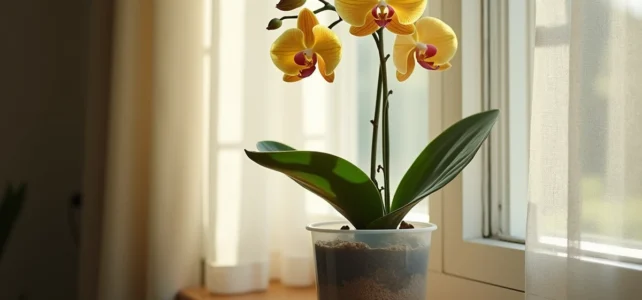
A floral spike turning yellow on an indoor Phalaenopsis often triggers a panic reaction. The usual reflex is to cut, repot, or change the fertilizer. Before any intervention, the diagnosis matters more than the action: depending on the stage of the plant’s cycle and the condition of the roots, this yellowing can be perfectly harmless or indicate a real imbalance in the growing conditions.
Water quality and substrate pH: the underestimated factor of yellowing
Most guides on orchid care address watering in terms of frequency. Too much or too little, the debate goes in circles. However, one parameter remains neglected in many households: the chemical composition of the water used.
In recent years, orchid enthusiasts and nurserymen have reported an increased frequency of yellowing related to overly hard or chlorinated tap water. Hard water alters the pH of the substrate over time with watering. When this pH exceeds the range favorable to orchids (between 5.5 and 7), the assimilation of mineral salts gradually blocks. The plant then shows diffuse yellowing on the spike and leaves, even if the light and watering frequency seem correct.
For chronic cases, where yellowing recurs despite standard adjustments, it is relevant to explore the yellowing orchid spike solutions related to pH control before questioning the entire care routine.
The recommendation that is becoming widespread: use filtered rainwater or diluted reverse osmosis water instead of pure tap water. This simple change resolves a significant portion of unexplained yellowing, particularly in regions where the water is hard.
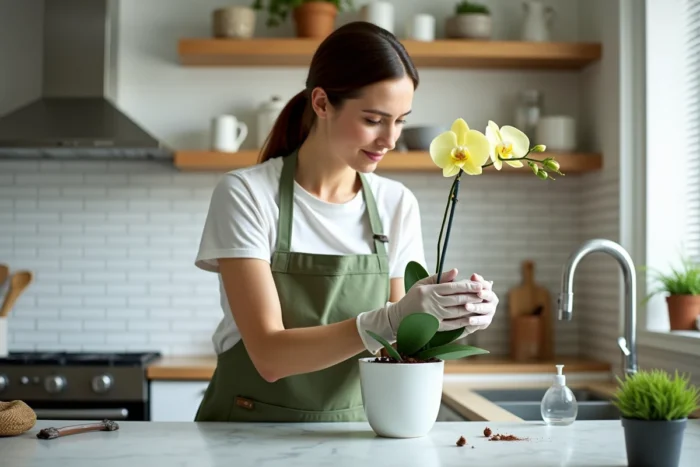
Yellow orchid spike after flowering: when doing nothing is the right response
For hybrid Phalaenopsis sold in large retail, the uniform and gradual yellowing of the floral spike after wilting is a normal sign of the end of a cycle. The plant redistributes its resources to the roots and leaves in preparation for future blooming. This process is not pathological.
The distinguishing criterion lies in one check: are the leaves firm and green, and are the roots flexible and green or silver when dry? If yes, the spike is yellowing due to natural exhaustion. Cutting it once completely dry is sufficient, without urgency.
On the other hand, a sudden yellowing, accompanied by soft leaves or brown and spongy roots, indicates an active problem. In this case, the spike is just one symptom among others, and it is the root condition that should guide the intervention.
Should you cut the partially yellow spike?
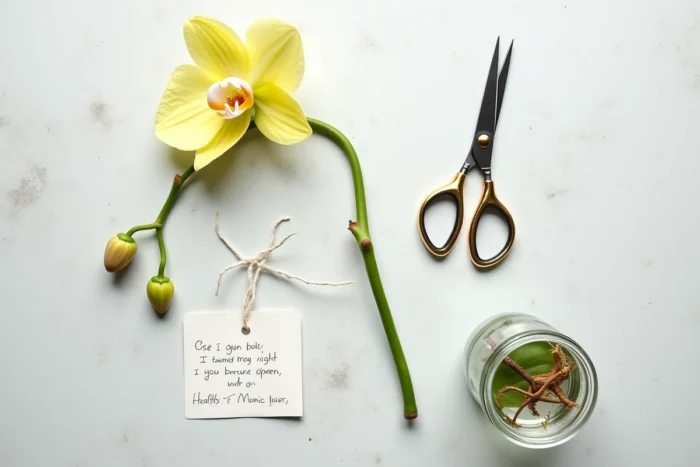
As long as a portion of the spike remains green, the plant can still draw nutrients from it or develop a secondary branch bearing flowers. Specialists recommend not intervening until the spike has completely dried. Cutting a still partially green spike deprives the orchid of resources it is in the process of recovering.
Home heating and indoor orchids: a climate conflict
The modern indoor environment poses a specific problem for orchids that classic guides rarely address in depth. Recent feedback points to a link between home heating and premature yellowing of floral spikes.
Radiators, ventilation systems, air conditioning: these devices create dry air and micro-variations in temperature that disrupt the plant’s metabolism. An orchid placed near a radiator experiences accelerated evaporation at the level of the aerial roots and substrate, causing water stress even with regular watering.
Favorable conditions to remember:
- A stable temperature, ideally between 18 and 26 °C, without direct exposure to a heat or cold source
- A sufficient ambient humidity level, which regular misting of the foliage and aerial roots helps maintain
- Bright but indirect light, near an east or northeast-facing window, never in full summer sun
A Phalaenopsis placed on the windowsill above a heater accumulates two aggressions: rising dry heat and nighttime cold from the glazing. This type of placement alone explains many cases of early yellowing.
Root diagnosis: the key before any action on a yellowing orchid
The yellowing of a spike draws attention, but the condition of the roots remains the true indicator of an orchid’s health. A transparent pot allows direct observation of their color and texture without repotting the plant.
- Green roots (after watering) or silver roots (when dry), firm to the touch, indicate a healthy plant. The yellowing of the spike is likely part of the natural post-flowering cycle
- Brown, soft roots or those emitting a smell of decay signal prolonged excess water and the onset of rot. In this case, the yellowing of the spike is just a secondary effect of a root problem
- Dry, brittle, and permanently gray roots indicate chronic water shortage or a substrate that is too degraded to retain moisture
Compacted substrate and repotting
The pine bark that makes up the classic substrate for orchids decomposes over time. After a few years, it compacts, retains too much water in the center of the pot, and suffocates the roots. A repotting in fresh, draining substrate can resolve yellowing that resists all other adjustments. The best time to repot: after flowering, when the plant enters the vegetative growth phase.
The most reliable reflex in the face of a yellowing spike remains to check the roots before changing anything. Watering with soft water, a stable location away from heat sources, and renewing the substrate when it compacts: these three parameters cover the vast majority of situations. If the plant retains green leaves and healthy roots, the yellow spike does not require treatment, just patience.