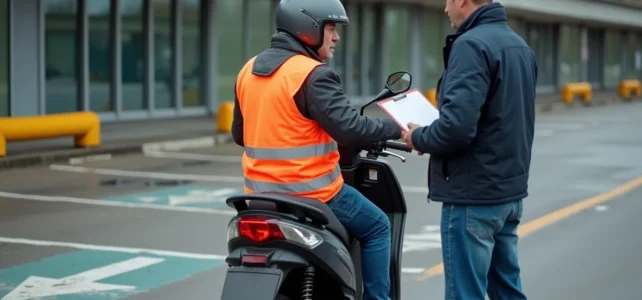
Riding a 125 cc motorcycle or a three-wheeled scooter with a B license requires meeting specific conditions, including a mandatory seven-hour training course. With factors such as license seniority, exemptions, and geographic validity, the rules deserve a methodical breakdown to avoid unpleasant surprises.
A1 License, 7-Hour Training, and B License: Comparative Table for Access to 125 cc
Three distinct pathways allow for riding a 125 cc in France. Their requirements differ in duration, cost, and the rights they confer.
| Criterion | A1 License (full exam) | 7-Hour Training (B License) | Exemption (B License before March 1980) |
|---|---|---|---|
| Training Duration | Several dozen hours (off-road + on-road) | 7 hours mandatory | None |
| Exam to Pass | Motorcycle code (ETM) + practical test | No exam | None |
| Required B License Seniority | Not applicable | Minimum 2 years | License issued before March 1, 1980 |
| Document Issued | A1 category license | Training certificate | No additional document |
| Validity Abroad | Recognized (European category) | France only | Variable by country |
This table highlights a gap often overlooked. The 125cc training with a B license provides a certificate, not a motorcycle license. This distinction has direct consequences for riding outside French territory.
Territorial Validity of the 125 Certificate: A Regulatory Blind Spot
The 7-hour training allows for riding a two-wheeled or three-wheeled vehicle of 125 cc in France. According to Conseilsauto, some countries only accept the A1 license for riding 125. The CCSTIB confirms that the 7-hour training is not recognized in all European states.
A motorcyclist holding only a B license and the certificate who crosses the Spanish or Italian border risks being fined. The A1 license, on the other hand, is included in the European directive and benefits from automatic recognition among member states.
For strictly urban use in France, the 7-hour training is sufficient. However, any prospect of motorcycle travel in Europe justifies obtaining the full A1 license, despite a significantly higher investment in time and budget.
Actual Access Conditions for the 7-Hour Training: The Age-Seniority Gap
The regulations impose two cumulative conditions for registration: holding a B license and having held it for at least two years. This dual requirement creates a scenario that is rarely explained.
According to Formalabs, a driver who obtains their B license at 17 will not be able to ride a 125 until they are 19 at the earliest. The access window does not open at majority, but two years after the date on the license.
Drivers exempt from training are those whose B license was issued before March 1, 1980. This exemption is total: no course, no certificate, no additional steps.
List of Conditions to Check Before Registration
- Be at least 18 years old at the time of training (minimum age requirement)
- Have held the B license for two full years, date verifiable on the driving document
- Register with an accredited driving school, the only entity authorized to issue the certificate
- Have compliant motorcycle gear: approved helmet, certified gloves, high-top shoes
Practical Course of the 7-Hour Training: Off-Road, On-Road, and Certificate
The training is divided into three modules conducted over one day. Each module aims at a distinct educational objective, evaluated by the instructor without a formal exam.
Theoretical Module
This first part lasts about two hours. It covers road safety specific to two-wheeled and three-wheeled vehicles: vehicle blind spots, braking distances, behavior at intersections. The instructor also discusses mandatory personal protective equipment.
Off-Road Module (not on public roads)
The student takes control of the motorcycle or scooter on a closed track. The exercises focus on low-speed balance, emergency braking, and basic trajectories. The off-road module allows for acquiring reflexes before riding in real conditions.
On-Road Module
The final part takes place on open roads. The instructor guides the student via radio communication. Merging onto highways, managing roundabouts, positioning in traffic: this module confronts the automobile driver with the vulnerability of two-wheeled vehicles.
At the end of these three modules, the driving school issues the training certificate. This document must be kept and presented in case of a check, along with the B license.
Cost of the 125 Training and Financing: What the CPF No Longer Covers
The price of the 7-hour training varies by driving schools and regions. No regulated price is set by the state, resulting in significant discrepancies from one establishment to another.
According to Caradisiac and L’automobiliste, the recent reform of the Personal Training Account has led to a drop in demand for funding motorcycle licenses via the CPF. Monpoleformation confirms that the CPF no longer allows for funding the 125 training under the same conditions as before. The out-of-pocket cost for the candidate has increased.
Comparing prices between several driving schools remains the most effective approach. The displayed price generally includes the provision of the motorcycle, helmet, and supervision, but some establishments charge for equipment separately.
The 7-hour training certificate provides quick and exam-free access to riding a 125 cc, provided the French framework is respected. Any ambition to ride beyond borders returns to the A1 license, the only title recognized at the European level.