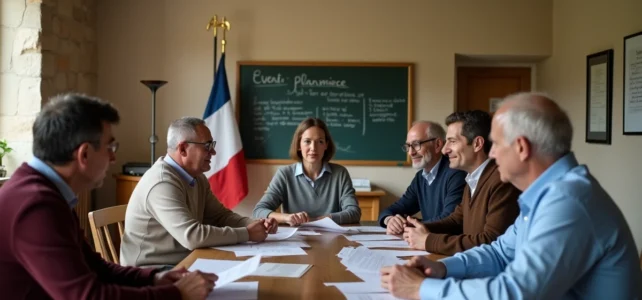
A festival committee is based on a specific legal framework, that of the law of July 1, 1901. The statutes must mention the name of the association, its purpose, the address of the headquarters, and the list of founding members, and then be declared at the prefecture. This administrative formality conditions the committee’s ability to open a bank account, sign agreements with the town hall, or apply for grants.
Distribution of responsibilities between the festival committee and the town hall
The most common confusion concerns the scope of each. The festival committee is responsible for organizing the associative activities: programming, logistics, communication, ticket or beverage sales. The town hall, on its side, retains authority over the use of public space, the safety of events, and regulatory permits.
This line of division is not always clear. The good practice guides published by departmental associations of mayors remind us that the mayor remains responsible for safety in public areas, even when a committee is hosting the event. In practical terms, the site plan, emergency access, emergency exits, booth locations, and noise management are part of a file that the committee must submit to the municipality before any event.
Failing to clarify this distribution from the creation of the committee exposes it to blockages when an event grows in scale. A committee wishing to establish a festival committee on solid foundations benefits from formalizing a written agreement with the town hall, specifying the obligations of each party.
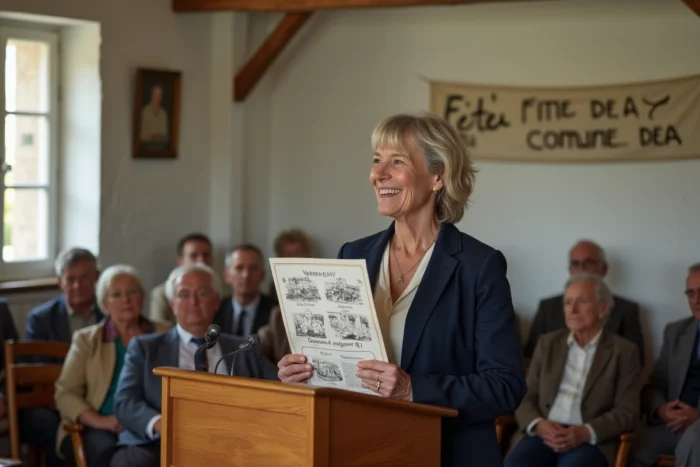
Drafting the statutes of a 1901 law association for a festival committee
The statutes are not a purely formal document. They set the internal rules of the game and prevent future conflicts. Several points deserve particular attention, often overlooked in the standard models found online.
- Membership conditions: specify whether the committee only accepts residents of the municipality or also residents from neighboring municipalities, and under what conditions a municipal elected official can be a member (a municipal councilor sitting on the committee must abstain during municipal deliberations concerning the association to avoid any conflict of interest).
- The method of designating the board: election at the general assembly, duration of terms, conditions for renewal. A term that is too long without rotation accelerates volunteer fatigue.
- The modalities for dissolution and transfer of assets: in case of cessation of activity, the statutes must indicate to whom the remaining funds will go (another association, the municipality, etc.).
A festival committee can operate independently of the town hall. It is not necessarily attached to it, contrary to what some local elected officials assume. The statutes may provide for reserved seats for municipal representatives, but nothing legally imposes this.
Safety and regulatory permits before the first festival
The safety file is the most technical aspect. It must be completed well before the event date, not the week before. Field feedback shows that municipalities that strengthen their preparation in advance encounter fewer difficulties on the day of the event.
The standard file includes a site situation plan, the positioning of fire access points, the location of water points, emergency contacts, details of temporary electrical installations, and the location of sanitary facilities. For a refreshment stand, specific rules apply depending on whether it is permanent or temporary, and the mayor issues the temporary beverage sales permit.
The issue of noise also deserves prior framing. Prefectural orders set hourly thresholds that the committee must know to correctly position the stage and speakers in relation to residences.
Particular case of fireworks and alternatives
Some areas are now testing alternatives to traditional fireworks, such as synchronized drones or LED devices. These formats do not eliminate regulatory constraints: a declaration at the prefecture is still necessary for a pyrotechnic show, and drone flights require specific permits. However, these solutions reduce the fire risk during dry periods, an argument that weighs in summer municipal decisions.
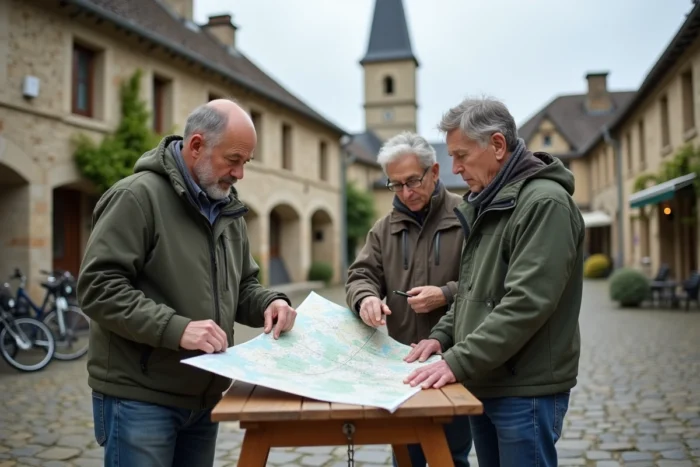
Volunteers and transmission: the fragile point of festival committees
Testimonials collected in the local press converge: it is often the same people who carry local activities for years. This concentration of tasks on a small core weakens the continuity of the committee. When two or three key members withdraw simultaneously, the association can fade away in a few months.
Formalizing the recruitment of volunteers changes the game. Rather than relying on word of mouth, some committees publish their needs on matchmaking platforms like JeVeuxAider.gouv.fr or display precise job descriptions (refreshment stand manager, safety officer, communication coordinator).
Transmission also involves a written annual calendar shared with all members. This document lists recurring tasks month by month: permit requests, equipment reservations, partner follow-ups, administrative deadlines. A shared calendar reduces dependence on the memory of a single person.
Renewing activity formats also helps maintain engagement. Alternating between Christmas markets, flea markets, outdoor concerts, and children’s events avoids the routine that discourages both volunteers and the public.
Creating a festival committee is not just about filing statutes at the prefecture. The viability of the project depends on the clarity of the agreement with the town hall, the rigor of the safety file, and the ability to renew the volunteer team. Committees that last are those that formalize early what others leave to improvisation.