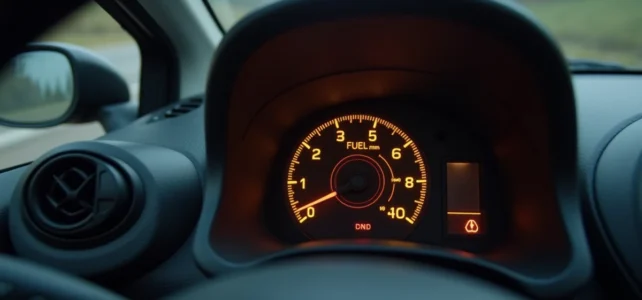
On a Renault Twingo equipped with the three-cylinder 1.0 SCe, the low fuel warning light comes on when there are about 6 liters left in the tank. This amount, related to the actual fuel consumption of the engine, determines the distance you can still travel before running out of fuel. However, this distance varies greatly depending on the type of journey, driving style, and the mechanical condition of the vehicle.
Reserve volume and consumption of the 1.0 SCe: the basic calculation
The principle is arithmetic. When the orange light comes on, the amount of fuel remaining is fixed, defined by the level sensor in the tank. On the Twingo 3, this value is around 6 liters.
The three-cylinder gasoline engine that powers the latest thermal generations shows a combined consumption of 6 to 7 liters per 100 km according to common usage readings. By dividing the reserve volume by this consumption, you get a theoretical range of between 80 and 100 kilometers of remaining autonomy.
This calculation assumes steady driving on clear roads. It represents a ceiling, not a guarantee. Several drivers report having traveled significantly less in urban areas, and the fuel reserve autonomy on Twingo directly depends on actual driving conditions.
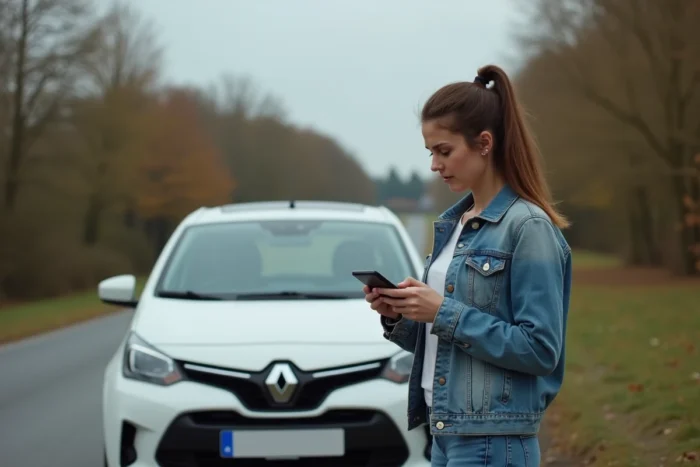
Twingo in the city or on the road: why the reserve autonomy gap can sometimes reach 30 km
The Twingo is a city car. Most of its trips are made in urban areas, where fuel consumption rises the fastest. Repeated accelerations at traffic lights, slowdowns, air conditioning in summer: each factor reduces the distance that can be traveled with those last liters.
On a highway trip at a stabilized speed of around 110 km/h, the engine operates in a more economical RPM range. The same reserve of 6 liters can then last significantly longer than in the city.
The gap between the two situations is not trivial. An urban trip can reduce reserve autonomy by a good third compared to a smooth journey on national roads. Counting on 80 km in the city is optimistic, especially with a loaded vehicle or an older engine that has been poorly maintained.
Factors that accelerate consumption on reserve
- Frequent restarts in dense traffic put more strain on the engine than continuous driving, even at low speeds.
- A clogged air filter or worn spark plugs increase actual consumption beyond manufacturer values, sometimes significantly.
- Air conditioning and electric heating impose an additional load on the engine, which burns more fuel to compensate.
- The weight carried (passengers, loaded trunk) modifies consumption, especially in a small engine like the 1.0 SCe.
Driving on reserve with a Twingo: concrete mechanical risks
Pushing off the trip to the gas station is not just a matter of distance. The fuel pump is submerged in the tank and uses the surrounding gasoline to cool itself. When the level drops below the reserve, the pump runs partially dry. Its internal temperature rises, which accelerates wear.
On a Twingo with a small tank capacity, this phenomenon occurs faster than on a vehicle with a 50 or 60-liter tank. Regularly driving on reserve shortens the lifespan of the pump, and its replacement represents a significant cost on an entry-level city car.
The bottom of the tank also accumulates residues (fuel impurities, micro-particles, condensation). When the level is very low, these sediments are sucked into the fuel system. The fuel filter clogs more quickly, and in extreme cases, impurities can reach the injectors.
Running out of gas in the Twingo: what insurers remind you
Auto insurers, particularly Allianz, emphasize a specific protocol in case of running out of gas. Do not attempt to restart multiple times in a row, as this can damage the starter and the pump. Turn on the hazard lights, pull over as far to the right as possible, put on a safety vest, and place the warning triangle.
Running out of gas on a fast lane poses a real danger: the vehicle loses its power steering and braking assistance as soon as the engine stalls. In a light and low Twingo, visibility to other road users decreases quickly, especially at night.
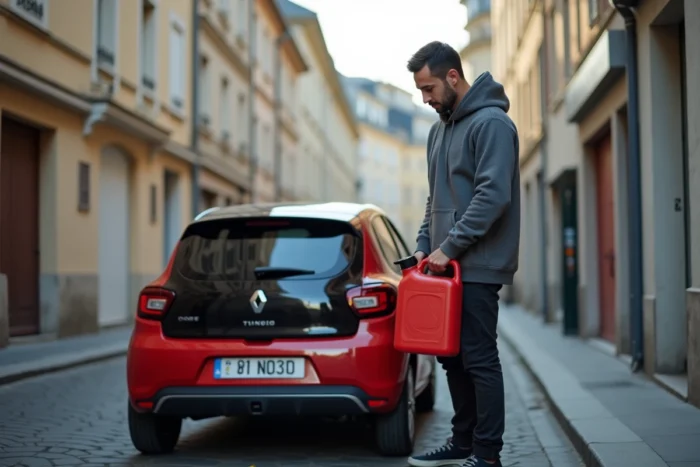
Reliable estimation of fuel reserve on Twingo: practical method
Rather than relying on a generic range, each driver can calibrate their own estimation. The method is based on a simple measurement.
- Note the exact mileage when the reserve warning light comes on.
- Drive to the nearest gas station and fill up completely.
- The volume displayed at the pump, subtracted from the total capacity of the tank, gives the actual reserve volume of your vehicle.
- Divide this volume by your average consumption (readable on the onboard computer) to obtain your actual remaining autonomy.
This personalized measurement is worth more than a theoretical number. It takes into account the age of the gauge sensor, driving profile, and engine condition. Two Twingos of the same model year can show a significant difference depending on their maintenance history and daily use.
The tanks of recent thermal Twingos remain modest, leaving little margin for error. With an exclusively gasoline engine and urban consumption often exceeding manufacturer data, it’s better to consider the reserve warning light as a signal for an imminent stop rather than an invitation to attempt the next trip. Keeping a quarter tank remains the simplest precaution to preserve both the mechanics and safety.