
In Switzerland, each resident consumes on average three times more resources than the planet can renew. We sort our waste rigorously, pay for taxed garbage bags, deposit glass by color, and often compost. However, adopting a more ecological lifestyle on a daily basis in Switzerland requires action where the impact is truly concentrated: food, housing, and transportation.
Recyclable packaging and littering: what will change concretely from 2026
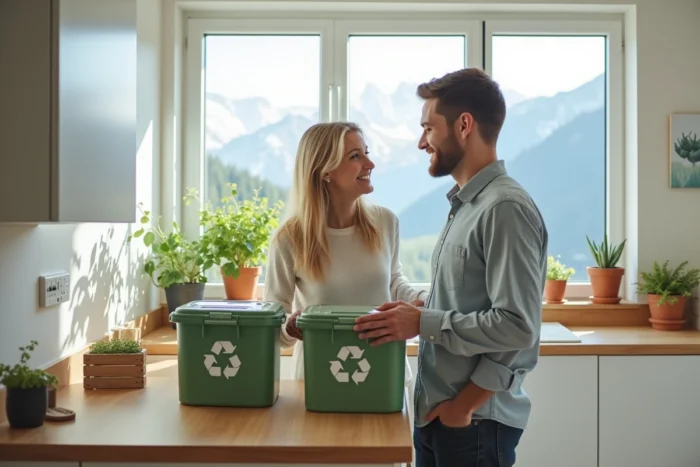
A new regulation now mandates that plastic packaging must be recyclable at least 55% and beverage cartons at 70%. For a Swiss household, this means one very practical thing: at the time of purchase, checking the recyclability labels on packaging becomes a reflex that makes regulatory sense, not just moral.
Littering (discarding waste in public spaces) has also become significantly more costly since August 2026, with standardized fines. Some may find this harsh, but the message is clear: reducing packaging at the source remains the most effective strategy. Bulk grocery stores and refill shops are multiplying in Swiss urban centers, and platforms like Tous Éco facilitate access to concrete alternatives for rethinking daily consumption.
Food in Switzerland: eating local is not enough without reducing meat
Buying vegetables at your local market is good. But food accounts for more than a quarter of the total environmental impact of Swiss consumption, and the heaviest item is not the transportation of tomatoes: it is meat.
In Switzerland, each resident consumes on average one kilogram of meat per week. Nutritional recommendations suggest rather 86 grams per day, which is less than a cervelas. If the entire Swiss population adhered to this threshold, we would almost no longer need to import feed from abroad.
What can be done without becoming vegetarian
We don’t have to give up everything. Replacing three meat meals per week with plant-based proteins (lentils, chickpeas, Swiss tofu) already produces a measurable effect on the household’s carbon footprint. Swiss short supply chains also offer local legumes, grown in the Bernese Seeland or in French-speaking Switzerland.
- Favor seasonal fruits and vegetables: strawberries in January travel by plane, while those in June grow just a few kilometers away
- Plan meals for the week to limit food waste, a problem that remains massive in Switzerland
- Try subscription farmer’s baskets, available in most Romandy and German-speaking cantons
Housing and energy: the most significant trade-offs
Heating a home in Switzerland remains one of the most energy-consuming aspects of daily life. Between an oil-heated house and an apartment connected to a heat pump, the emissions gap is considerable. The problem is that we don’t always choose our heating system, especially when renting.
What can be done in all cases: lower the thermostat by one or two degrees and insulate windows with adhesive seals. It may seem trivial, but over a Swiss heating season (which easily lasts six months), the difference in energy consumption is significant.
Hot water and electronic devices
Sanitary hot water absorbs a often underestimated share of the energy bill. Reducing shower time by a few minutes, installing an economical showerhead (available at hardware stores for a few francs): these actions have immediate returns.
For electronic devices, the useful reflex is not to frantically turn them all off (the returns on the actual gain from power strips with switches vary), but rather to extend the lifespan of each device. Using a computer for seven years instead of four reduces its carbon footprint by almost half. Switzerland has a strong network of repair shops and second-hand stores.
Ecological mobility in Switzerland: beyond the train
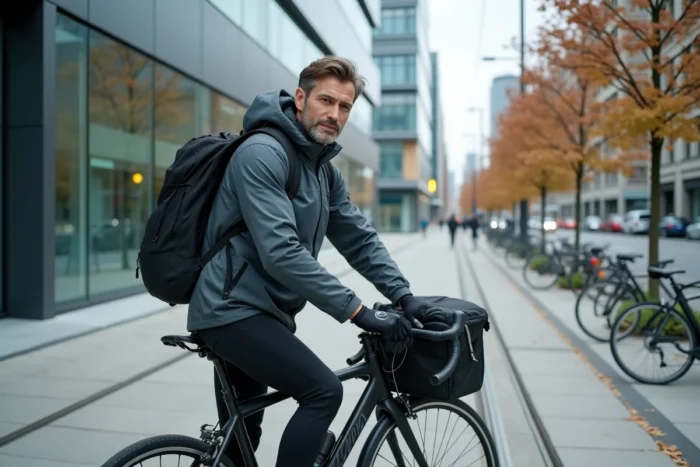
The Swiss railway network is among the densest in the world, and most guides recommend taking the train. This is good advice, but part of the population lives in suburban areas where eliminating the car completely remains difficult.
The most realistic approach is to identify regular trips and replace those that can be done by public transport or electric bike. The home-to-work commute is the first to examine. For shopping, electric cargo bikes are gaining ground in Romandy and Zurich agglomerations.
- Combining a half-price CFF ticket with a bike-sharing subscription covers a large part of urban travel
- Carpooling remains underutilized in Switzerland for commuting trips, even though several platforms exist
- For vacations, favor destinations reachable by train to drastically reduce the travel footprint
Local support for the transition: the example of the Nyon Region
Individual actions matter, but they gain effectiveness when public authorities support the movement. The Nyon Region, for example, encourages its municipalities to develop municipal energy and climate plans (PECC), which facilitate the exchange of information and best practices among residents.
This type of initiative exists in other Swiss regions, sometimes under different names. Inquire with your municipality about available subsidies (insulation, solar panels, boiler replacement) often unlocks unknown financial aid. The canton of Vaud, the canton of Geneva, and several German-speaking cantons offer specific support programs.
Three areas concentrate the majority of a Swiss household’s ecological footprint: the contents of the plate, the heating method, and the kilometers traveled by car. Acting on these three levers, even partially, produces more tangible results than the sum of dozens of micro-actions.