
A threshold is a masonry (or metal) element that serves as a base for the guide rail or stop for the doors. When it cracks, sinks, or crumbles, the gate rubs, derails, or puts pressure on its hinges. Repairing this threshold first requires understanding whether the damage is superficial or structural, as the method differs radically depending on the diagnosis.
Surface Repair or Complete Threshold Replacement: Key Indicators
The first question to ask when faced with a damaged threshold is not “what product to apply,” but “why did the threshold give way at this point.” A localized chip on the edge, slight surface wear, or an isolated hairline crack fall under surface repair. A patching mortar or a two-component sealant is sufficient in these cases.
On the other hand, certain signs indicate that a quick fix won’t hold. A crack that runs across the entire width of the threshold signals a foundation issue. If the threshold shows visible sinking (the rail is no longer horizontal, the sliding gate derails, or the door rubs against the ground on one side), the problem lies beneath the surface, at the level of the beam or reinforcement.
Three indicators should lead to a complete replacement:
- The sinking is gradual and worsens with vehicle passage, indicating a compaction defect in the excavation base or insufficient reinforcement under the footing.
- Cracks reappear after an initial surface repair, a sign that the structural movement has not been addressed.
- The threshold is separating from the pillars at the corners, where mechanical stresses concentrate and moisture penetrates most easily.
If you find several tips for fixing a gate threshold recommending a simple leveling, first check the horizontal alignment with a level over the entire length. A noticeable gap to the naked eye requires further investigation into the diagnosis.
Reinforcement and Installation: The Invisible Diagnosis Beneath the Concrete
Most repair guides start with surface cleaning. This is a sequencing error. Before touching the mortar, it is essential to assess what is happening beneath the threshold, as this is where the durability of any intervention is determined.
The reinforcement determines the mechanical stability of the threshold. On a sliding gate, the reinforced concrete beam supporting the rail must withstand repeated loads. If the reinforcements are undersized, poorly positioned, or corroded, cracking will return regardless of the quality of the repair mortar applied on the surface.
For an old threshold, tap the concrete with a hammer. A hollow sound indicates internal delamination or an area where the cover of the reinforcements has burst. If rust appears on the surface of the cracks, the rebar is affected. It is then necessary to clear the corroded reinforcements, treat or replace them, and restore the cover with an appropriate mortar before pouring the finishing layer.
Reservations for electrical conduits (motorization, lighting) represent another common weak point. A poorly protected cable passage creates a fragile area in the threshold. During a repair, check the condition of these conduits and reposition them if necessary before forming the mold.
Preparing the Support: Cleaning, Degreasing, and Bonding
Once the diagnosis is made and the decision is taken (surface repair or partial replacement), the preparation of the support alone determines the longevity of the intervention.
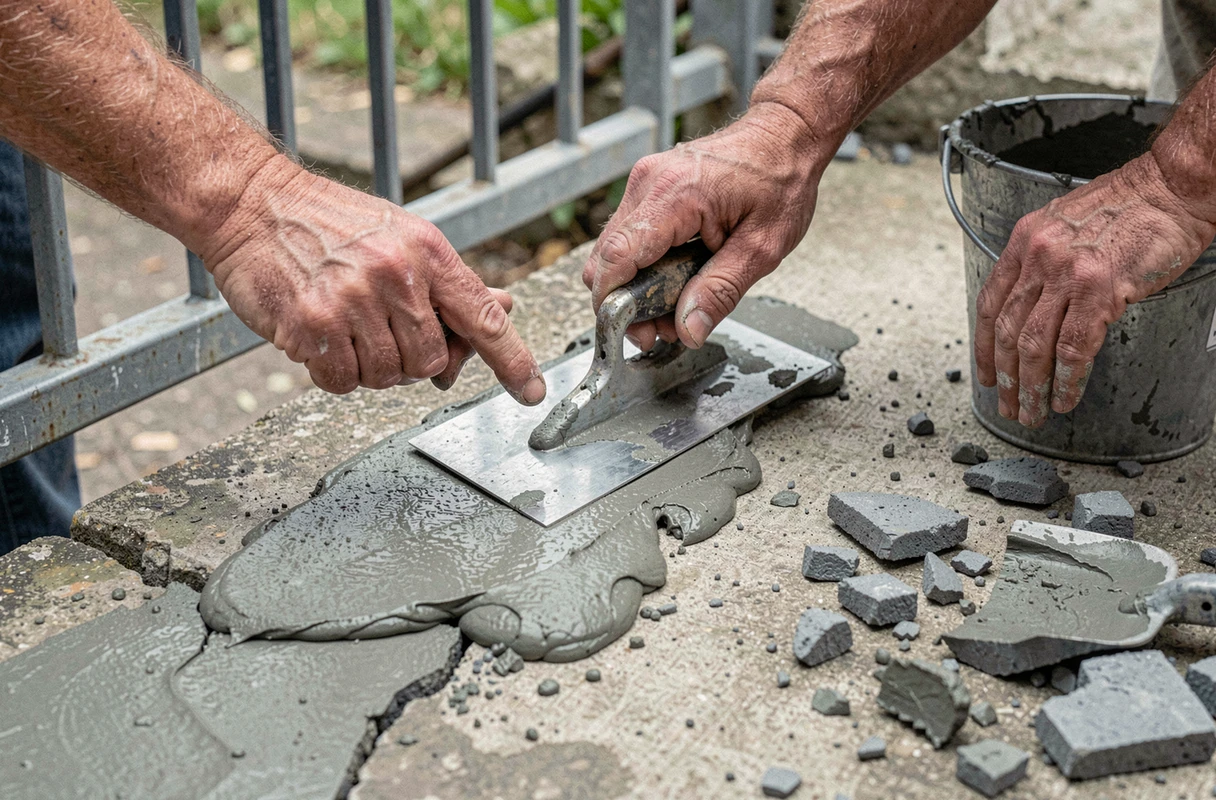
Start by removing any crumbling parts with a chisel or hammer. The healthy concrete must be exposed. Then sand the area to create a roughness that will promote the adhesion of the new mortar.
Cleaning after sanding is as crucial as the patching product. Residual dust, grease stains (common on a threshold where vehicles pass), and foam residues prevent proper bonding. A degreaser applied with a cloth, followed by rinsing with clean water and allowing for complete drying, prepares a receptive surface.
For surface repairs, a two-component sealant is suitable for small chips and shallow cracks. For more significant repairs, a structural repair mortar (class R3 or R4 depending on the expected load) offers mechanical resistance compatible with vehicle passage.
Molding and Pouring the Threshold: Method for a Level Result
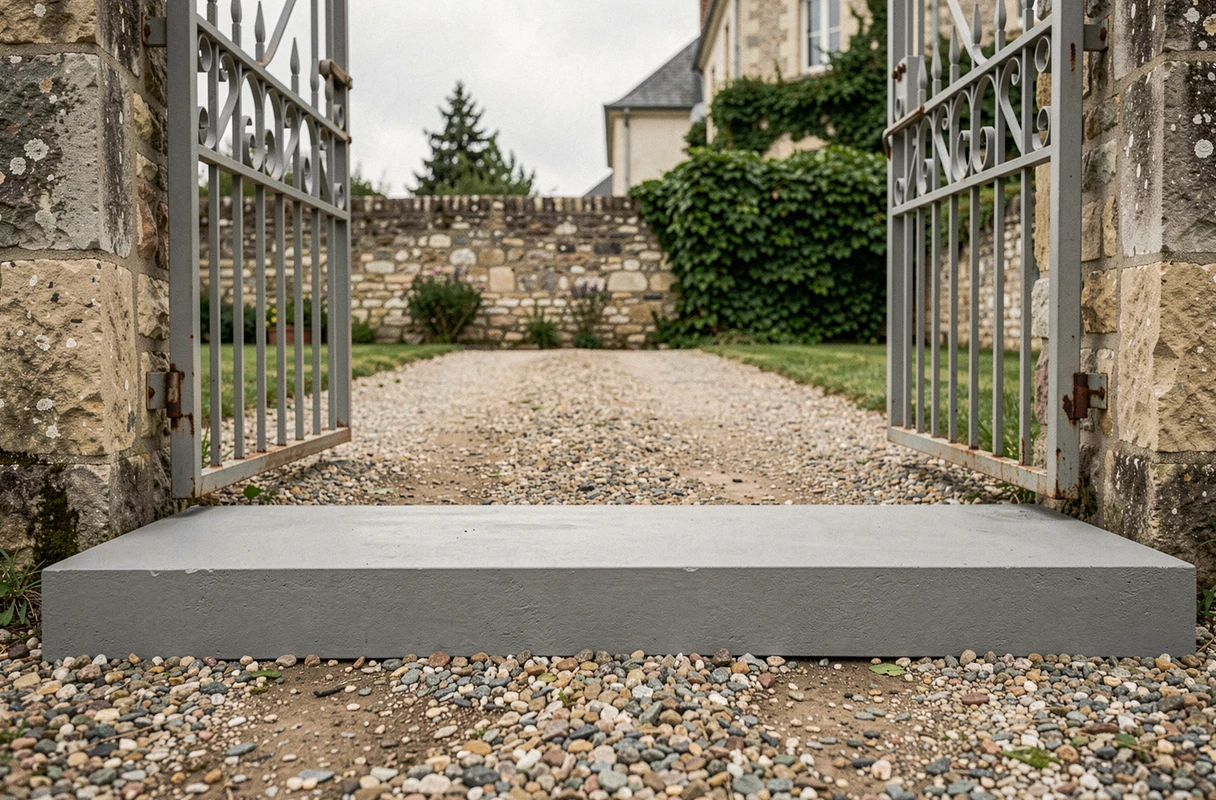
When the repair involves an entire section of the threshold, the molding becomes the central technical step. The quality of the final result depends more on the rigor of the mold than on the composition of the concrete.
Use sufficiently rigid boards, braced against the pillars and held in place with clamps or props. The bottom of the mold must be clean and slightly oiled (release oil or simple linseed oil) to facilitate removal without tearing the surface.
- Check the level of the mold along its entire length before pouring. For a sliding gate, the tolerance is very low: the rail must rest on a perfectly horizontal surface.
- Moisten the old concrete before pouring to prevent it from absorbing water from the fresh mortar and causing too rapid drying (a source of micro-cracks).
- Pour in a single pass if possible, vibrating the concrete as you go to eliminate air bubbles, especially around the reinforcements and conduit reservations.
- Respect the complete drying time before reinstalling the gate or securing the rail. Premature removal of the mold compromises the final strength of the threshold.
The level should be checked at every stage, not just at the end. A check after molding, another after pouring, and a final one after the initial setting allow for correction of a defect before it is set in the concrete.
Metal or Concrete Threshold: Adapting the Repair to the Material
Metal thresholds (steel or aluminum) present different problems. The weld points at the corners are the first to fail, followed by areas exposed to water splashes and de-icing salt.
On a metal threshold, sanding and rust treatment precede any repair. A layer of rust converter stabilizes existing oxidation. Patching is then done with polyester or epoxy sealant, sanded, and then covered with a suitable outdoor anti-rust paint.
On a concrete threshold, compatibility between the old and new material is the key factor. A mortar that is too rigid on slightly flexible old concrete will crack at the interface. Prefer a repair product whose modulus of elasticity is close to that of the existing support.
The choice between localized repair and complete replacement always comes down to the same criterion: has the cause of the damage been addressed, or merely masked. A threshold that is correctly diagnosed, prepared, and repaired with the right material should not require further intervention for many years.